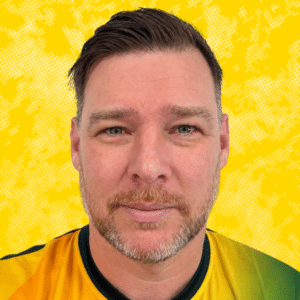
Pete Miller
Invictus Australia Sports Festival 2026
ADF Service:
I joined the Australian Army in 2011 and served as an infantry soldier with the 8th/9th Battalion, Royal Australian Regiment (8/9 RAR), based at Enoggera Barracks in Brisbane. I served with Bravo Company and reached the rank of Private. My time in the Army gave me the opportunity to work as part of a close-knit infantry team and develop skills and experiences that have stayed with me well beyond my military career.
In 2014, my service came to an end when I was medically discharged from the Australian Army.
Other Information:
I am a school teacher, husband and proud father of two girls, aged 11 and 7. Our family also includes our cat, Oreo. Sport has become an important part of my life, and I currently play sledge hockey with the Swanbourne Warriors and Garden Island Pirates.
Outside of teaching and sport, I have a wide range of interests and hobbies. I enjoy gaming, writing, reading, travelling and music. I enjoy collecting things connected to my interests and am always looking for something new to experience or get involved in.
Age: 42
Hometown: Sydney, New South Wales
Current town: Perth, Western Australia
What is the nature of your injury/ illness?
During my army service, I sustained a spinal injury during a training exercise, which ultimately required spinal fusion surgery and was the primary reason for my medical discharge. During my service, I also experienced significant hip issues that required surgery.
The effects of these injuries have lasted well beyond my service. I have since undergone numerous hip and ankle surgeries, and in 2022 underwent a second spinal fusion. Ongoing physical challenges require me to continually adapt, and they have played a significant role in my journey since leaving the military.
What role has sport played in your rehabilitation?
Sport has always been an important part of my life. Growing up, I was involved in team sports including soccer and baseball, and I have always enjoyed the sense of belonging and camaraderie that comes from being part of a team.
Since my injuries, sport has taken on an even greater meaning, and it has become an important part of my rehabilitation. I currently play sledge hockey, and whenever I can get on the ice, I enjoy it immensely. While the physical benefits of getting back into sport have been important, it is the friendships and social connections that make the greatest impact.
Being around people who are motivated, resilient and determined to challenge themselves encourages me to do the same. When you surround yourself with people who believe in their own ability to improve and overcome challenges, that attitude becomes contagious. It makes you want to push yourself, set new goals and become a better version of yourself.
For me, sport has provided more than physical rehabilitation. It has given me a community, renewed confidence, a sense of purpose and most importantly, friendships with people who understand the challenges of adapting and moving forward.
How have you stayed connected to sport?
After the Invictus Games, I stayed connected to adaptive sport through my local wheelchair basketball team. Several of my teammates were also people I knew through Invictus, and when we travelled to tournaments, I would often come across players from other teams who I had met through the Invictus community. It was a great way to maintain those friendships and that sense of connection long after the Games had finished.
In 2024, I moved to Perth, where I’ve found there are currently fewer opportunities to participate in adaptive sport. I hope this continues to grow in the future, as I know firsthand how valuable these sporting communities can be for physical, mental and social wellbeing.
How did it feel being told you will compete for Team Australia?
Being told that I would have the opportunity to compete for Team Australia again was an incredible feeling. There was a mixture of excitement, pride and gratitude, but also a real sense of privilege in being given another opportunity to wear the green and gold.
For me, being part of Team Australia is about much more than competing. It is the opportunity to be surrounded by an amazing group of people, build new friendships and reconnect with a community that has already had such a positive impact on my life.
How have you stayed connected to sport?
After everything that has happened since my previous Invictus experience, including further surgeries, rehabilitation and moving across the country, being selected feels like another important chapter in that journey. I am incredibly proud to represent Australia, but I am equally excited about sharing the experience with my teammates and seeing what we can achieve together.
What will 'winning' look like for you at the Invictus Australia Sports Festival 2026?
For me, being selected to be part of the Invictus Australia Sports Festival is already a win. Anything that happens from here is a bonus.
Winning isn't about medals or where I place. If I can build new friendships, connect with more people in Perth’s adaptive sporting community, and leave the festival with greater knowledge and links to clubs and sporting opportunities that I can continue with afterwards, then that will be a win.
More importantly, if my experience can inspire someone else, particularly my two daughters, then that means far more to me than any result. I want them to see that the negative things that happen in our lives don't have to define what comes next. With the right people around you and the willingness to keep moving forward, a negative can become the beginning of something positive.
You never really know what opportunity, friendship or experience might be waiting around the corner. If my girls can grow up knowing that, then I have already won.



“Confidence is everything in life, and confidence is gained through sports and adventure through organisations like Invictus.”
Today, world-record-breaking mountaineer Hari Budha Magar MBE took on Australia’s highest mountain alongside fellow veterans and family members, including Invictus Games alumni Doug Griffiths and Cindy Chawner.
After losing both legs above the knee while serving in Afghanistan in 2010, Hari turned to sport and adventure to rebuild his confidence and discover what was still possible.
That journey has since taken him to the summit of Mount Everest, through the Seven Summits, and now to Mount Kosciuszko alongside members of the Australian Invictus community.
Together, Hari, Doug and Cindy are showing how the confidence, connections and opportunities created through the Invictus movement can continue long after the Games.
Hari’s first book, Conquering Dreams, is now available.

What becomes possible when you have Team Veteran behind you?
“Captaining the team was well outside my comfort zone. By the end, I improved my self-confidence and belief in my capabilities.”
For Jim, taking on the Pan Pacific Masters Games meant stepping outside his comfort zone, backed by veteran mates who understood the challenge.
Through initiatives like Team Veteran, Invictus Australia creates a safe and welcoming environment where veterans and family members can feel supported to have a go, connect with others and challenge themselves through sport.
Jim was one of 330 people who signed up to be part of Team Veteran across all sports, each taking their own step into something new.
Read more about Jim’s story. Link in bio.

“After my injury, the way I got my confidence back is from sports and adventure, similar to what the Invictus Games does [for veterans].” — Hari Budha Magar MBE
Meet Hari. A former British Gurkha soldier who has challenged perceptions of disability and made mountaineering history.
After losing both legs above the knee while serving in Afghanistan, Hari turned to sport and adventure to rebuild his confidence. He went on to successfully challenge a ban preventing double amputees from climbing Mount Everest, before becoming the first to reach its summit in 2023. Earlier this year, he completed the Seven Summits.
Today, we welcomed Hari to Canberra, where he connected with Australian veterans at the @awmemorial , including fellow bilateral amputee and Invictus Games alumnus Luke McCallum.
On Thursday, Hari will take on Mount Kosciuszko alongside Australian veterans and their families, including Invictus Games alumni Doug Griffiths and Cindy Chawner, with Luke cheering them on.
It’s another opportunity to share experiences, challenge themselves and strengthen friendships through sport, demonstrating the connections that continue long after the Invictus Games.
#InvictusAustralia #InvictusGames #UnconqueredTogether